

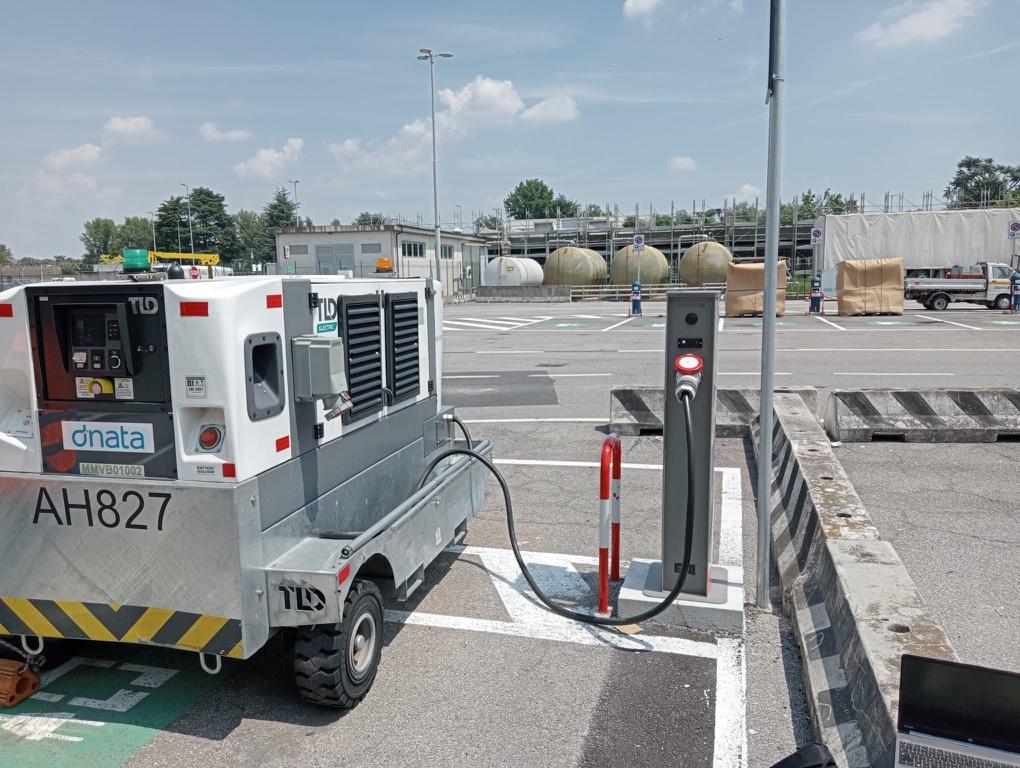
Energy management at Milano Linate and Milano Malpensa airports
This phase of the project will cover approximately 400 industrial socket outlets and 50 chargers across Milano Linate and Milano Malpensa. SEA Aeroporti di Milano will use PowerPay to manage access, monitor electricity consumption and allocate energy costs to individual ground handling companies.
IOT Solutions, in partnership with Scame Parre S.p.A., has delivered an integrated energy management solution for SEA Aeroporti di Milano. The system combines Scame’s electrical distribution equipment with the PowerPay platform, bringing industrial outlets and dedicated chargers into a shared operating environment.
As ground handling companies electrify their fleets, SEA needs to know who is using each supply point, how much electricity they consume and when charging equipment becomes available for the next vehicle.
From existing infrastructure to new supply points
The project has two stages. First, existing industrial socket outlets are replaced with Scame distribution boards connected to PowerPay. The second stage adds new power supply points across the airport aprons and connects them to the same platform.
Scame designed the boards so installers can reuse existing cabling and protective devices. This reduces installation work, labour costs and the materials needed for the upgrade.
Existing staff badges link energy use to each company
Ground handling personnel use their existing RFID staff badges to activate and deactivate the power supply. Each industrial socket outlet has a dedicated energy meter. A programmable logic controller in the distribution board processes the meter readings, and the system communicates over the airports’ existing LoRaWAN wireless network.
PowerPay links badge access to metered consumption. SEA can then attribute electricity use to the relevant ground handling company and use those records for consumption-based billing. For personnel on the apron, the process fits into an established routine with a badge they already carry.
Charging notifications help keep supply points available
Vehicle owners receive a notification when charging is complete, whether the vehicle is connected to an industrial socket outlet or a dedicated charger. They can then move the vehicle and free the supply point for the next user. If a fully charged vehicle remains connected beyond a defined period, PowerPay can also apply an overstay fee.
Maintenance teams receive separate alerts for events such as circuit breaker trips. These alerts help them identify an interruption and respond promptly.
Hourly consumption data helps identify peak demand
PowerPay logs energy consumption at hourly intervals. Charts show when demand is highest, giving SEA a basis for adjusting charging schedules and reducing peak power demand.
The hourly records complement the operational alerts. Maintenance teams can respond to an interruption as it happens, while airport energy managers can review longer-term patterns when planning how to use the available charging capacity.
Integration with airport systems and room to expand
Dedicated APIs connect PowerPay with SEA’s existing corporate platforms and personnel badge management systems. This allows the airport operator to manage energy access and consumption within its established administrative processes.
PowerPay also supports electric vehicle charging stations through the Open Charge Point Protocol (OCPP). As ground handling fleets expand, SEA can add industrial outlets and chargers to the same platform, keeping access control, consumption monitoring and cost allocation consistent across both airports.
Would you like to connect your port to the network? We can review your existing power pedestals, water points and invoicing system with you, and show how consumption can be tracked from the outlet on the quay to the invoice received by the vessel operator. Contact PowerPay